
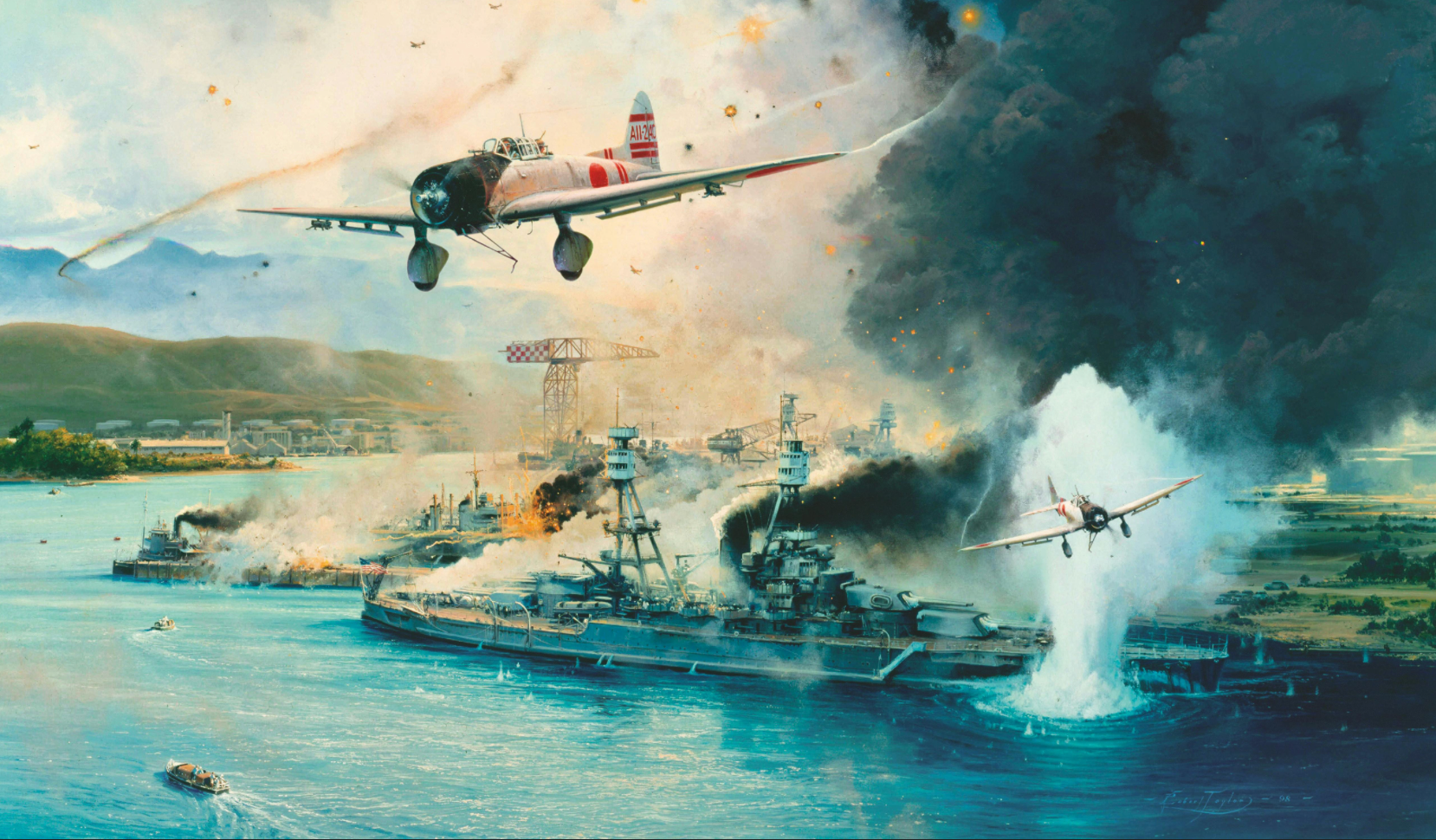
The Japanese attack on Pearl Harbor in 1941 now feels like ancient history. Only a few men who were there on December 7th are still alive. One man who was there and likely celebrated the attack, Takeo Yoshikawa, is a central character in my book Into the Sun.
Yoshikawa was a graduate of the Imperial Japanese Naval Academy and an ensign in the Imperial Japanese Navy (“IJN”). He had a health condition that prevented him from serving at sea, but he impressed his senior officers enough to be transferred to Naval Intelligence. Yoshikawa developed a reputation as a keen analyst with a knack for espionage.
Much ink has been spilled on Japan’s architect of the attack, Admiral Isoroku Yamamoto, who also figures in the early part of the novel. Less is commonly known about Yoshikawa, without whom it can be argued that the attack might have failed. The Japanese war planners knew that they had to deliver a knockout blow to the United States early in any conflict. And that meant focusing on our naval power. Yoshikawa arrived on Pearl Harbor in March of ’41, under the disguise of vice-counsel at the Japanese Consulate in Honolulu. His mission was to gather intelligence on the U.S. Pacific Fleet based at Pearl Harbor. Here he is interviewed after the war by Walter Cronkite.
Yoshikawa was skilled at his job and often disguised himself as a tourist, sometimes accompanied by local geisha girls, to observe the movements of the fleet. He documented his observations, including details of the harbor, the locations of the Navy’s capital ships, and military airfields, in coded diplomatic messages sent back to Tokyo. The success of Japan’s surprise attack on Pearl Harbor attests to the quality of intelligence Yoshikawa collected.
After the attack, Yoshikawa escaped back to Japan, his role still unknown, using diplomatic cover. But this is where the story takes an odd turn.
After the war ended, Yoshikawa struggled to readjust to civilian life. He attempted to open a candy store, but it failed because his wartime contributions became widely known. Instead of being praised by his neighbors, he was shunned and blamed for what Japan endured during and after the war. He published his memoirs in 1963 and died in 1993, largely forgotten.
